
What is ME/CFS?
About 15 minutes to read. You can stop and come back at any time: each chapter stands on its own.
Myalgic Encephalomyelitis (M.E) is a chronic, fluctuating, neurological illness which affects a number of bodily systems, including the nervous and immune systems.
In many countries it is also known as Chronic Fatigue Syndrome (CFS). The abbreviation ME/CFS is often used to refer to the illness.
In a number of cases the trigger for onset of ME/CFS may be a viral infection, this can lead to a diagnosis of Post Viral Fatigue Syndrome (PVFS).
At KCIMESG we recognise all of these terminologies equally and welcome anyone diagnosed with M.E, CFS, ME/CFS, or PVFS.
ME/CFS is more than being tired. It is a seriously debilitating illness which causes profound fatigue and energy impairment. Over the years the illness has been stigmatised and minimised and this is something that KCIMESG works hard to dispel.
It is a biophysical illness and has been recognised as a neurological disease by the World Health Organisation since 1969. There have been efforts by some parts of the medical establishment to position ME/CFS as a psychological illness, but these theories have been repeatedly debunked.
A 2015 study in Denmark found that people with ME/CFS have a lower quality of life score than most other chronic illnesses, including cancers, chronic renal failure, and multiple sclerosis.
It is very important to seek medical help and pursue a diagnosis if you think that you may be suffering from ME/CFS. You can find out more about symptoms and diagnosis below.
People with ME/CFS vary widely in their experience of the illness. Some experience a sudden onset, others a gradual onset. Symptoms can fluctuate over time and people may move between mild and severe phases. Find out more about degrees of severity.
There are no recognised cures or treatments. Recovery is rare (estimated at less than 5% of cases), although there are ways to try and manage the illness which enables some people to stabilise their symptoms. We have some information on this in management and pacing. Graded Exercise Therapy (GET) and Cognitive Behavioural Therapy (CBT) have previously been promoted as treatments for ME/CFS but recommendations for these have been withdrawn. It is very important if you have ME/CFS or suspect that you may that you do not attempt any form of Graded Exercise.
It has previously been estimated that 250,000 people in the UK suffer from ME/CFS, however the true number is likely to be higher due to undiagnosed cases, lack of recording in the healthcare systems, and more recently the emergence of Long Covid. You can find out more about the relationship between ME/CFS and Long Covid below.
1 Symptoms and diagnosis
Key points
- Four core symptoms must be present to diagnose ME/CFS.
- Post Exertional Malaise (PEM) is the hallmark symptom.
- While ME/CFS is suspected, do not “push through”: rest and conserve energy.
In 2021 the UK National Institute for Health and Care Excellence (NICE) published new guidelines for ME/CFS. The full guidelines can be found on the NICE website.
A summarised version of the guidelines produced by the ME Association can be downloaded for free from their website.
Contained in the guidelines was a definition of the 4 core symptoms which must be present to diagnose ME/CFS:
- Debilitating fatigue that is worsened by activity and is not significantly relieved by rest
- Post Exertional Malaise after activity, which is delayed in onset, disproportionate to the activity, and has a prolonged recovery
- Unrefreshing sleep or sleep disturbances
- Cognitive difficulties (sometimes called “Brain fog”) which may include memory problems, difficulty concentrating, trouble finding words etc.
Post Exertional Malaise or PEM is the hallmark symptom of ME/CFS which differentiates it from other fatigue related illnesses.
As well as these core symptoms there are a wide range of other symptoms which may be present.
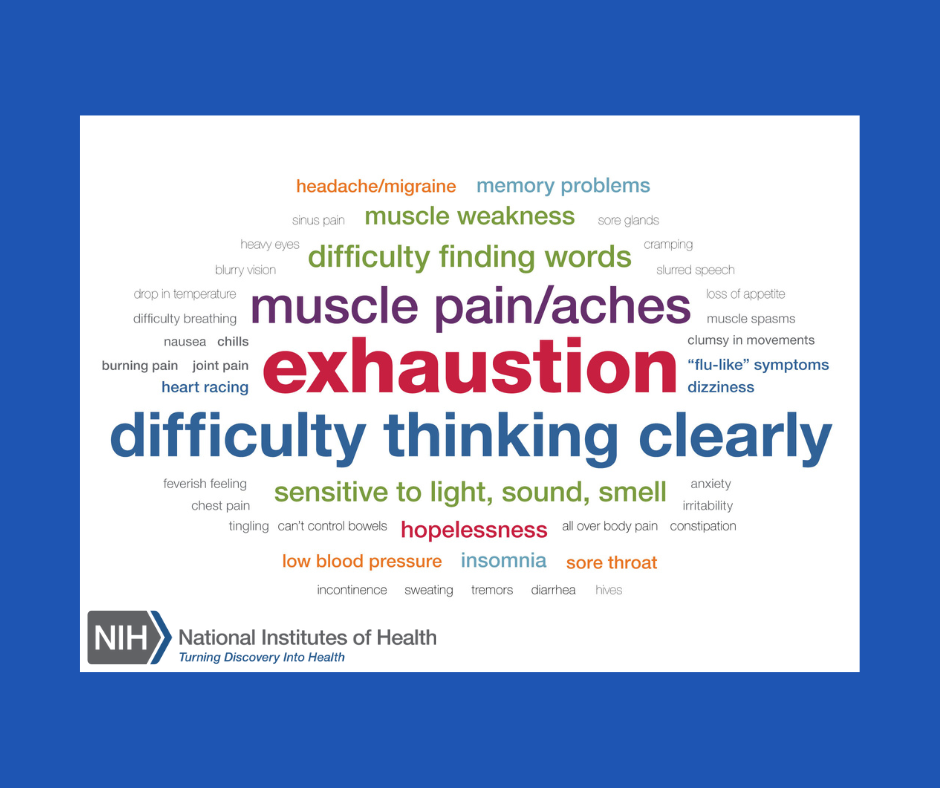
The NICE 2021 guidelines advise healthcare professionals that where the 4 core symptoms have been present for greater than 6 weeks in adults, or 4 weeks in children and young people, then ME/CFS should be considered if the patient has also had a significant reduction in their level of activity function and the symptoms are not explained by another condition.
A range of tests should be carried out (see guidelines) to exclude other conditions. While ME/CFS is suspected patients should be advised:
- Not to “push through” and use more energy than they have
- Rest and conserve energy, changing daily routines if required.
Where the 4 core symptoms persist for more than 3 months and no other condition is able to explain these, then the patient should be diagnosed with ME/CFS and referred to a specialist ME/CFS service to confirm the diagnosis and develop a care and support plan.
2 Degrees of severity
ME/CFS is a spectrum illness with people having different levels of symptoms and functionality. People with ME/CFS can move on the spectrum over the course of days/weeks/months/years.

Whilst symptoms and severity vary for every individual with ME/CFS, a broad categorisation can be made as follows:
Mild
- Are able to care for themselves but may need some support in domestic activities
- May be able to work, but only at the expense of other activities
Moderate
- Have reduced mobility and are restricted in all areas of daily living
- Mostly housebound
- Likely to have given up work or education
- Need rest periods throughout the day
Severe
- Unable to carry out all but the most minimal daily tasks
- Mostly bed bound
- Hypersensitivity to light/sound/smell/touch
- Severe cognitive difficulty
Very severe
- Fully bed bound
- May struggle to communicate
- May need nutritional support (tube fed)
- Can be fatal
3 Post-exertional malaise (PEM)
Key points
- PEM is a worsening of symptoms after even minor physical, cognitive or emotional effort.
- It usually starts 12–72 hours after the activity.
- Recovery can take days, weeks or months.
Post Exertional Malaise (PEM) is the hallmark symptom of ME/CFS.
It is the worsening of symptoms following even minor exertion. This exertion could be physical, cognitive, or emotional.

Any activity which causes a person with ME/CFS to exceed their energy limit can lead to PEM. This could be as simple as:
- Walking or other light exercise
- Attending a social event
- Reading or writing
- Exposure to excess stimulus (e.g. light/sound)
- Taking a shower or bath
The onset of PEM is typically delayed by 12-72 hours following the activity.
It causes a worsening of symptoms for a period of time, this is often referred to as a “flare” or a “crash”.
It can take days, weeks, or months to return to previous levels of functioning (or “baseline”).
It is very common, particularly in non diagnosed or newly diagnosed cases of ME/CFS, to see repeated cycles of over activity and crashing.
This is often referred to as the “push and crash” cycle.
Over time this can lead to extended periods of PEM, or even permanent reduction in level of functioning.
4 Management and pacing
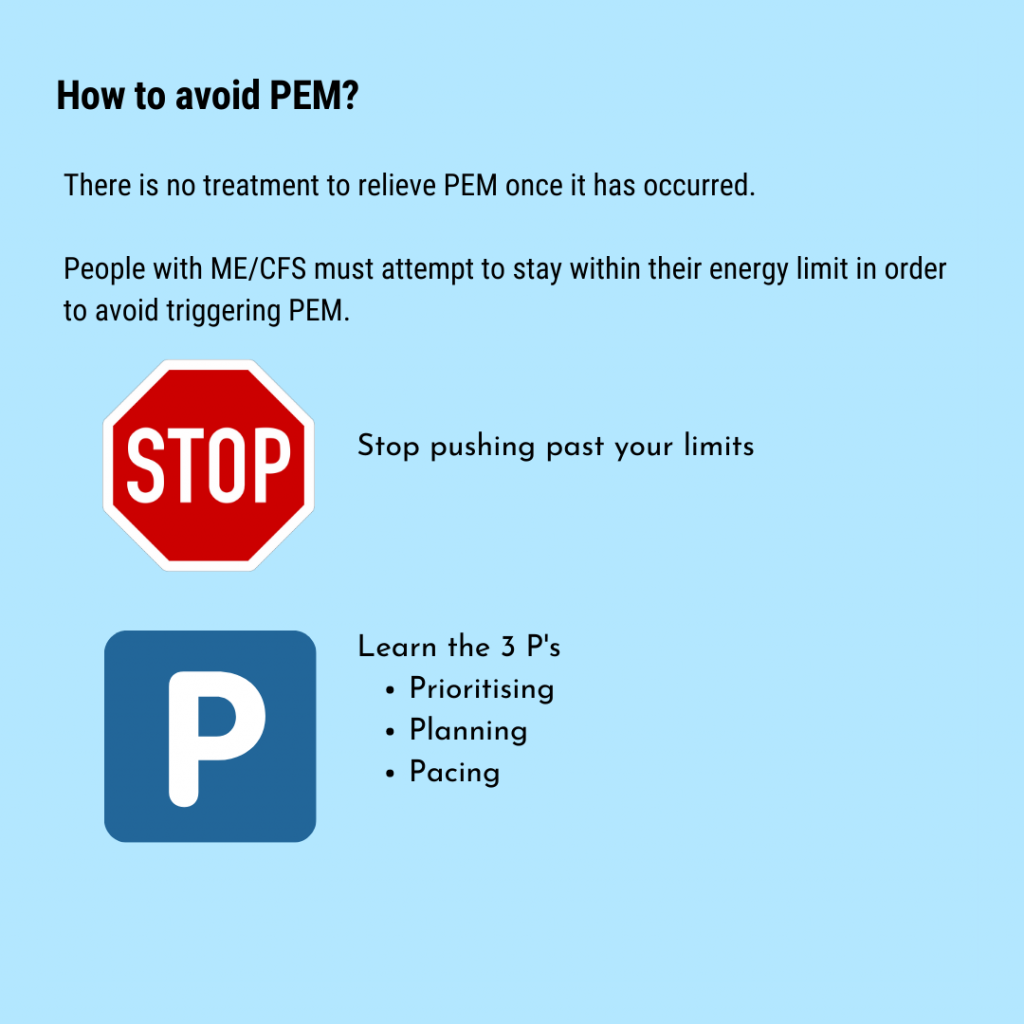
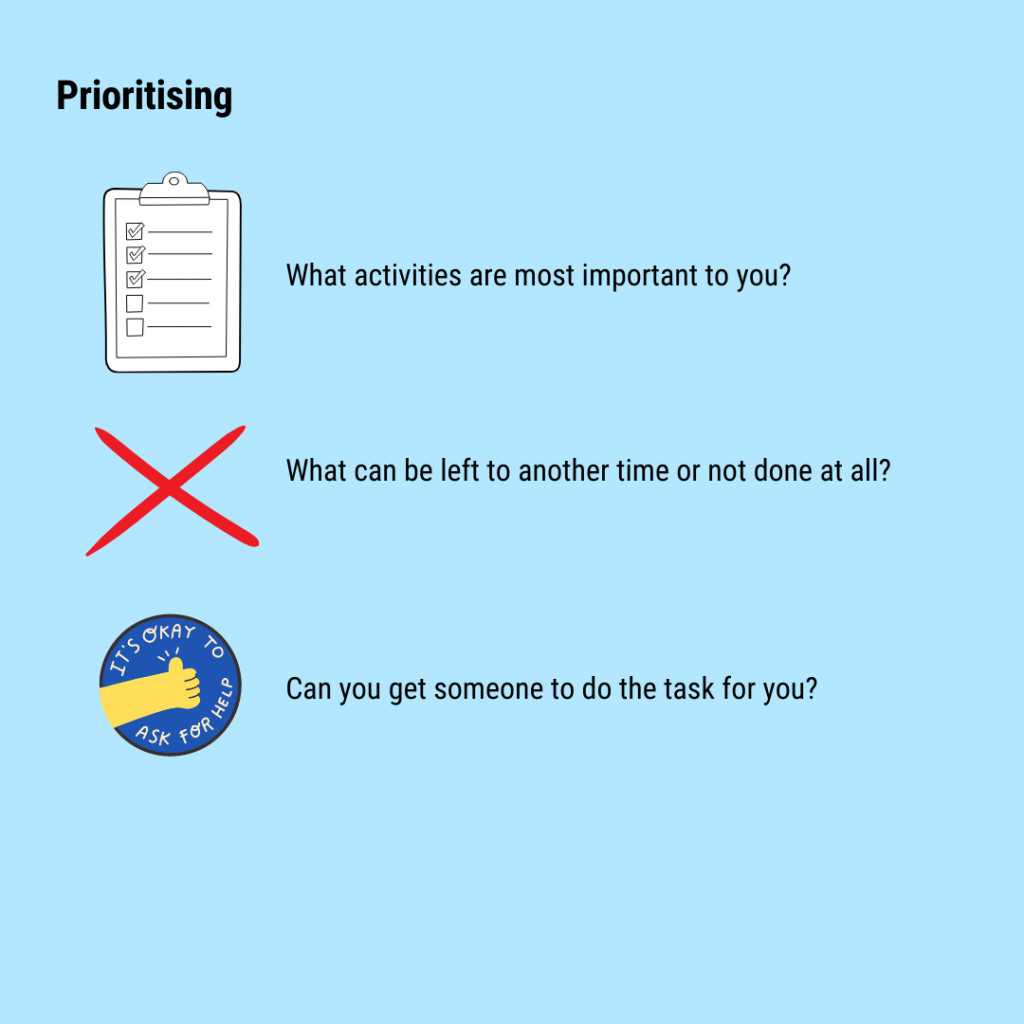
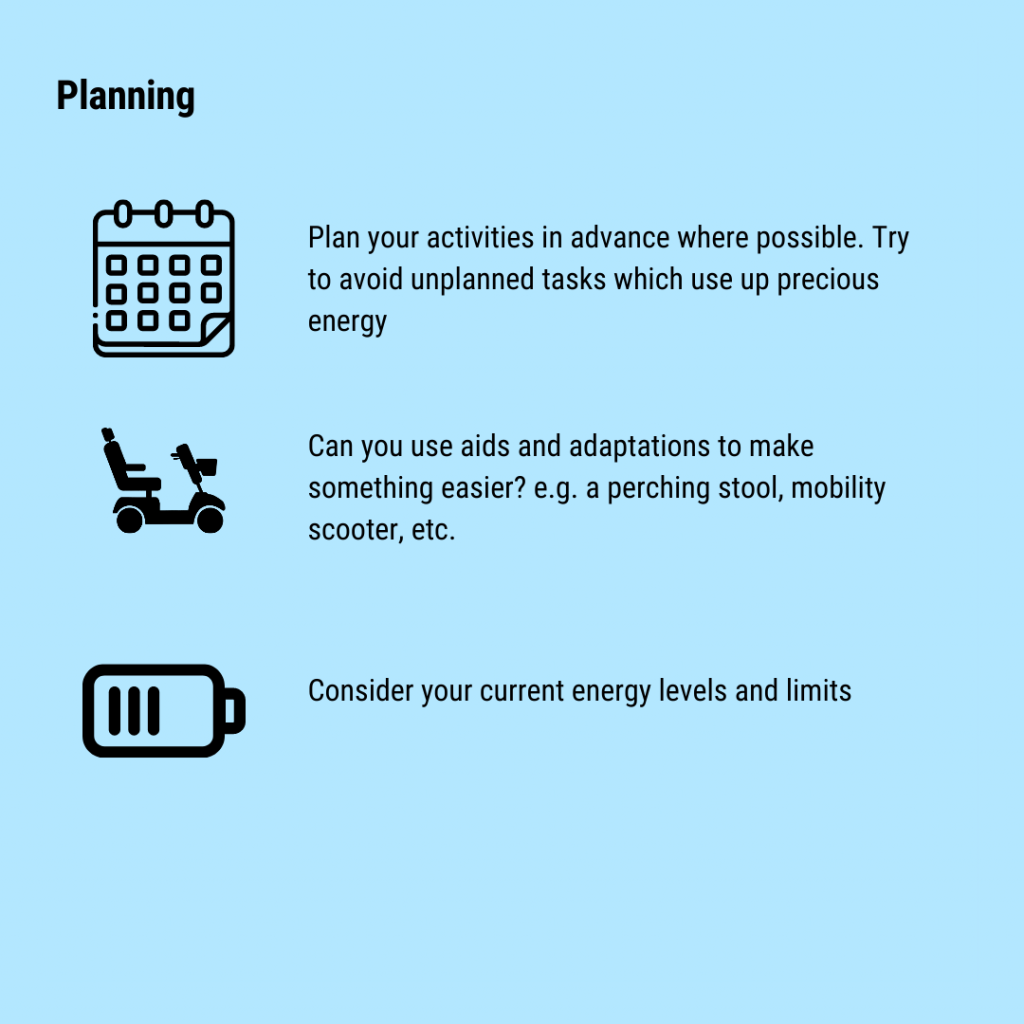
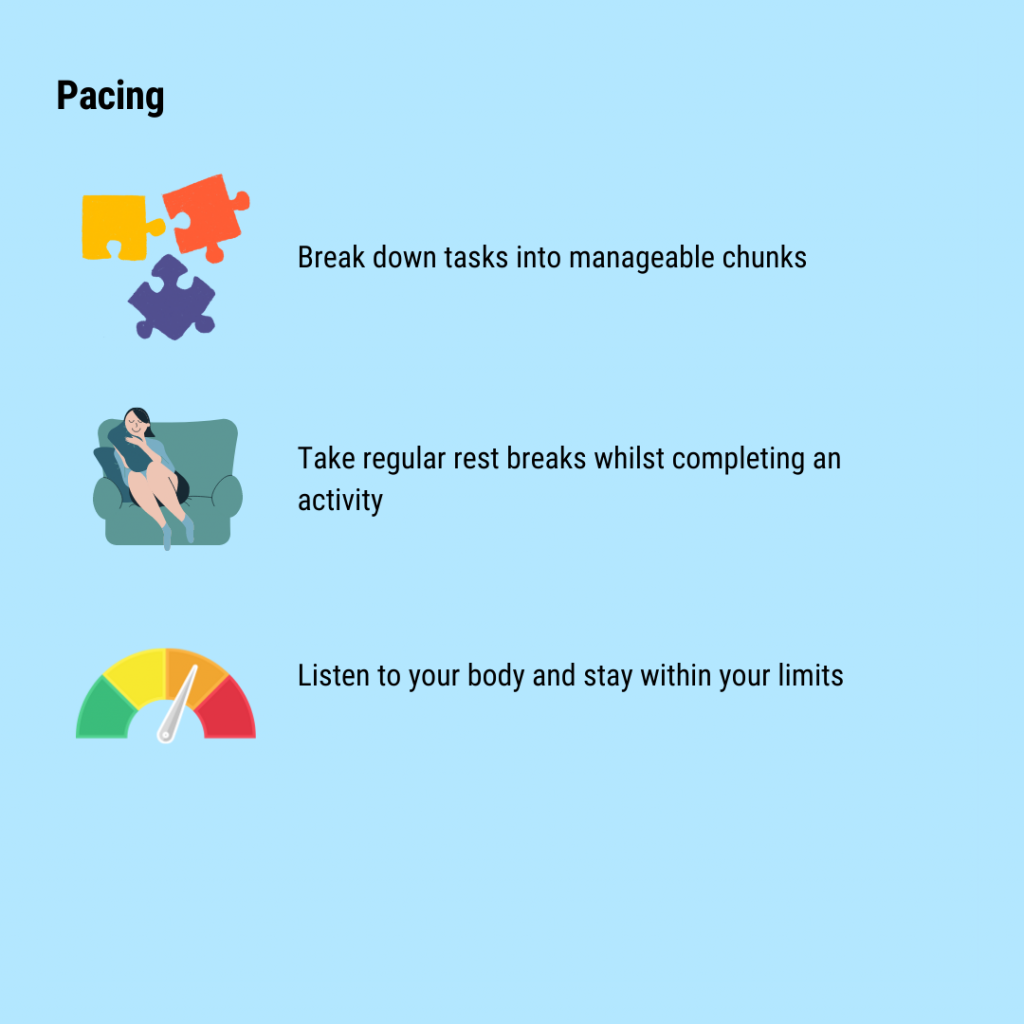
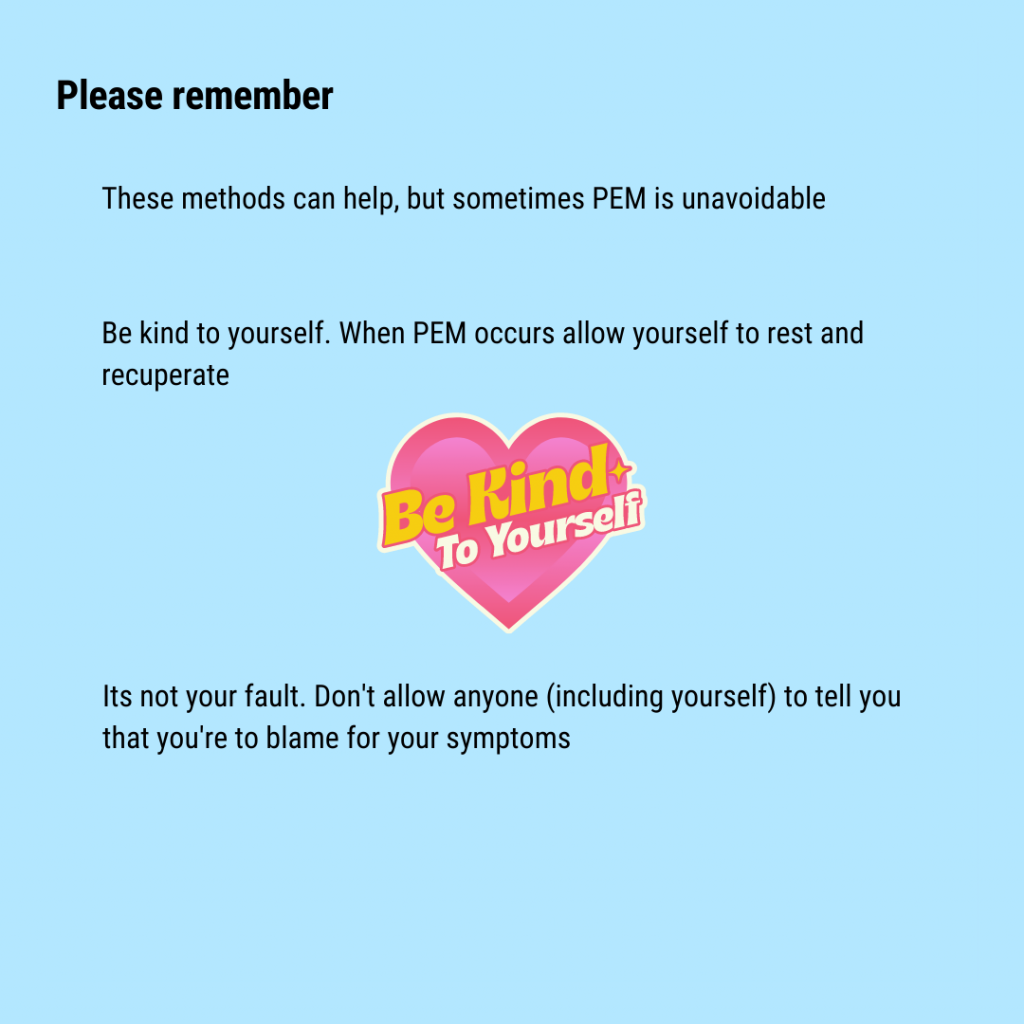
There are ways to try and manage the illness which enable some people to stabilise their symptoms. Our guides cover avoiding PEM, prioritising, planning, pacing, and things to remember.
5 ME/CFS and Long Covid
In early 2020 a new viral infection emerged which spread into a worldwide pandemic, this infection was named SARS-CoV-2 or Covid-19.
It has been a long held view that viral infection can be one of the triggers of ME/CFS and there was concern that a viral pandemic would lead to a rise in cases of ME/CFS or Post Viral Fatigue Syndrome. Unfortunately, this now appears to have become reality.
Since the early stages of the pandemic there has been an estimated 10-15% of people infected with Covid-19 who have not made a full recovery after the acute illness phase. The term Long Covid has been used to describe this persistence of symptoms lasting more than 3 months after the initial infection.
Whilst there are a wide range of symptoms associated with Long Covid, including respiratory and cardiovascular issues, a significant proportion are experiencing fatigue, cognitive impairments, and Post Exertional Malaise.
Long Covid patients also often demonstrate the fluctuating pattern of symptoms and impairment seen in ME/CFS patients.
A number of preliminary studies around the world have shown that around 50% of patients with Long Covid meet the diagnostic criteria for ME/CFS.
The Office of National Statistics has estimated that there are over 2 million people affected by Long Covid in the UK, this means potentially 1 million new cases of ME/CFS.
At KCIMESG we have recognised the overlaps between ME/CFS and Long Covid since early in the pandemic and welcome anyone suffering from Long Covid, whether diagnosed or not, to join us for support and information.
6 Help and resources
We are looking to develop a library of both national and local resources to help people with ME/CFS. If you would like to suggest any additions then please contact us.
Local resources
Healthcare
Leeds and West Yorkshire ME/CFS Service – Specialised service for people with ME/CFS in Leeds and West Yorkshire. Multi-disciplinary team for adults over 17 years of age. Referrals can be made by your GP or other health professional involved in your care.
Benefits and social care
Kirklees Citizens Advice – Citizens Advice and Law Centre for Kirklees offering information and support on a range of topics including benefits, employment, housing, and more.
Calderdale Citizens Advice – Citizens Advice for Calderdale offering information and support on a range of topics including benefits, employment, housing, and more.
Kirklees Council Adult Social Care – Information on accessing Adult Social Care in Kirklees.
Calderdale Council Adult Social Care – Information on accessing Adult Social Care in Calderdale.
Carers Count – Support and information for unpaid carers in Kirklees.
Carers Wellbeing Service – Support and information for unpaid carers in Calderdale.
Kirklees Young Carers Service – Support for young people aged 8-17 caring for someone in Kirklees.
Calderdale Young Carers Service – Support for young people aged 8-18 caring for someone in Calderdale.
Travel
Kirklees Blue Badge – Apply for a blue badge parking permit for residents of Kirklees.
Calderdale Blue Badge – Apply for a blue badge parking permit for residents of Calderdale.
Kirklees Travel Pass – Apply for a concessionary travel pass for buses and trains for residents of Kirklees.
Calderdale Travel Pass – Apply for a concessionary travel pass for buses and trains for residents of Calderdale.
National resources
ME/CFS organisations, education and information
The ME Association – A UK based charity providing advice and support to people with ME/CFS. They offer a range of informational leaflets about various aspects of ME/CFS, publish news on research and development, and run a telephone support line.
Action for ME – A UK based charity supporting adults and children with ME/CFS. They provide advice, advocacy services, healthcare, and a telephone support service.
ME Action – A global network of advocates and affiliates for ME/CFS.
Dialogues for a neglected illness – This is a project funded by the Wellcome Public Engagement Fund which produced a number of films reflecting ME/CFS. It explores aspects of the disease from the perspectives of doctors, researchers, patients, carers, advocates and MPs.
Healthcare
NICE Guidelines on ME/CFS – The National Institute for Health and Care Excellence (NICE) published updated guidelines in October 2021 for the diagnosis and management of ME/CFS. These outline the standard of care that all patients with suspected or diagnosed ME/CFS should receive in England.
Benefits and social care
Government Benefits – Home page for UK government benefit information and claims.
Turn2Us – UK based charity offering information and support for benefit claims.
Fightback4Justice – UK based non profit Community Interest Company (CIC) offering information and support for benefit claims.
NHS Social Care and Support – Information on Social Care and Support from the NHS.
Carers Trust – UK based charity offering information and support to unpaid carers.
Carers UK – UK based charity offering information and support to unpaid carers.
Travel
Disabled Persons Railcard – Apply for a disabled persons railcard to receive discounts on rail travel.
Network Rail Assisted Travel – Information on how to access the assisted travel for elderly and disabled passengers on the UK rail network.
KCIMESG provides information about ME/CFS but does not recommend or provide treatment or symptom management plans. Please talk to a medical professional before making any changes to your care.